
Recap: Medicine Hat’s Inaugural Cultural Forum – Strengthening Culture, Community & Business
Recap: Medicine Hat’s Inaugural Cultural Forum – Strengthening Culture, Community & Business
On Monday, March 23, the Chamber attended the City of Medicine Hat’s inaugural Cultural Forum, held at the Esplanade. The day brought together artists, cultural organizations, businesses, and community partners to explore how cultural development supports a vibrant, connected, and economically strong city.
Arts, Heritage & Entertainment Plan: A Roadmap Forward
The forum began with a powerful opening reflection and dance by the Indigenous collective Matriarch Movement. The collective led a smudging of the room, offering a space-cleansing ceremony meant to welcome positive energy and intention into the day. Each participant was also gifted with a sweetgrass braided bracelet.
Next, Aaron Nelson, Acting Director of Community Development, presented an overview of the City’s Arts, Heritage and Entertainment Plan. His presentation highlighted the City’s four roles, the vision of the plan, and the two main focus areas:
- Program Development
Ensuring opportunities for creative expression, cultural experiences, and community participation.
- Service Delivery Enhancement
Improving the City’s capacity to support cultural organizations, streamline processes, and strengthen local partnerships.
The plan reinforces that cultural development is not separate from community development—it's integral to it.
Community Panel: Collaboration at the Heart of Cultural Growth
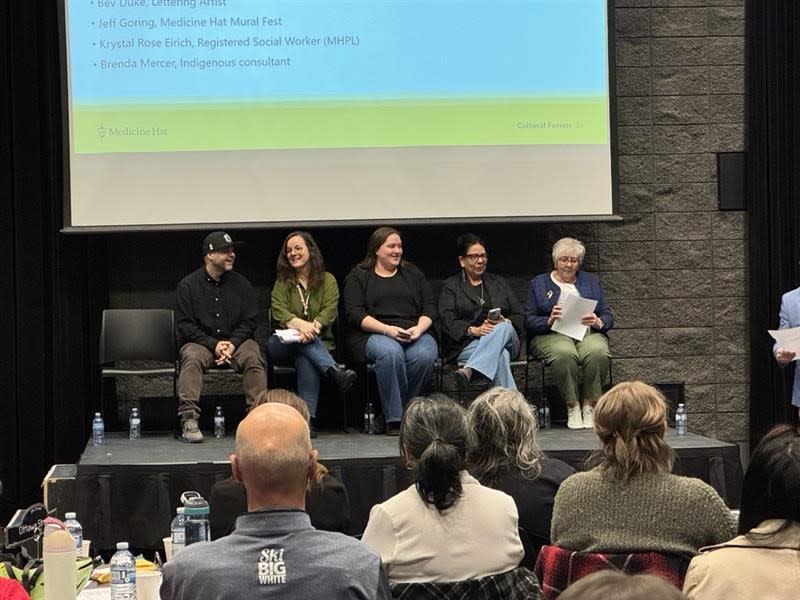
A panel of five community members followed the presentation:
- Bev Duke – Lettering Artist & MH Art Club Member
- Jeff Goring – Medicine Hat Mural Fest
- Krystal Rose Eirich – Registered Social Worker (MHPL)
- Brenda Mercer – Indigenous Consultant
- Morgan Johnson – Communications & Marketing Coordinator, Southeast Alberta Chamber of Commerce
| Visual Artist
The conversation emphasized several key themes:
1. Collaboration is Essential
Among artists and cultural groups, businesses, neighbourhoods, institutions, and communities – those present, and those not represented in the room.
2. Get the Right People at the Table
Meaningful cultural development depends on strong relationships and ensuring that decision makers include those with lived experience, cultural insight, and sector expertise.
3. Accessibility
Ensuring individuals, including young people, can access creative spaces, programs, and mentorship helps sustain cultural growth long term.
4. Cross Promotion is Key
Better connections between businesses, community organizations, and the City create stronger cultural ecosystems and more visible cultural opportunities.
Downtown Tours, Learning Sessions & Networking
After the panel, attendees joined downtown tours coordinated by Tourism Medicine Hat, choosing from several themed explorations.
Back at the Esplanade, the day continued with a Social Media Marketing Fundamentals workshop led by Linda Hong, Social Media Strategist and Consultant. Linda shared practical tools and strategies for elevating digital storytelling, helping strengthen an online presence.
The event wrapped up with discussion tables and networking—an opportunity for attendees to build connections and spark new collaborations.
Why the Arts, Heritage & Entertainment Plan Matters to Business
A thriving cultural sector is directly connected to a thriving business community. Here’s why:
1. Cultural Vitality Drives Economic Vitality
Artists, performers, cultural organizations, and creative entrepreneurs are businesses. They contribute to job creation, attract visitors, and generate economic activity.
2. Strong Culture Attracts Talent & Investment
People are drawn to communities with vibrant public spaces, events, and creative energy. Businesses benefit when the region is seen as a dynamic and welcoming place to live, work, and invest.
3. Cross Sector Collaboration Leads to Innovation
The plan encourages businesses to partner with cultural groups for events, programming, placemaking, and marketing. These partnerships spark new ideas and amplify community engagement.
4. Culture Enhances Downtown & Retail Districts
Murals, performances, festivals, and public art draw people into local businesses and help create memorable experiences that support foot traffic and spending.
5. Business Voices Are Needed at the Table
The plan emphasizes inclusion, and that includes the business community. When businesses participate in cultural planning, decisions better reflect economic realities, workforce needs, and opportunities for collaboration.
Conclusion
Medicine Hat’s first Cultural Forum highlighted just how vital Arts, Heritage, and Entertainment are to the community. The Chamber looks forward to continuing these conversations and supporting initiatives that strengthen both our cultural landscape and our local economy.
If you’d like to explore opportunities to collaborate on cultural initiatives, please reach out—we’d love to help you get connected. Learn more about the Arts, Heritage, and Entertainment Plan on the City’s website here.